Projects
I also publish peer-reviewed research. View publications
Simak: Agentic Arabic-First Document Extraction
2026Simak (سماك, “pillar/support”) turns plain-language requirements into production document extractors. A user describes what they need, a wizard agent interviews them, proposes a JSON schema, and deploys an extractor powered by structured-output LLMs, all behind a simple API key.
Built Arabic-first for Saudi document workflows, with PDPL compliance and bilingual RTL support as hard constraints.
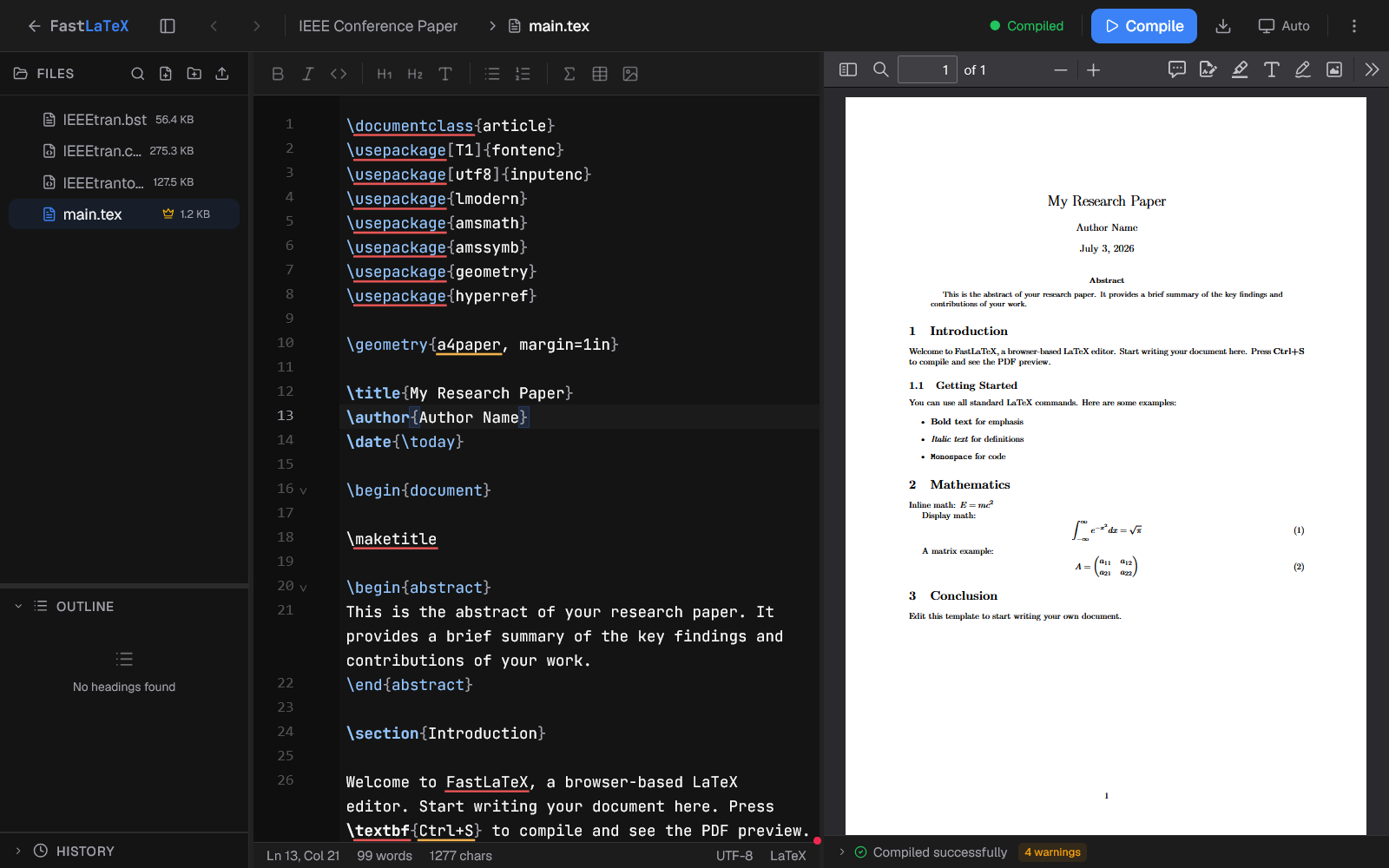
FastLaTeX: Browser-Based LaTeX Editor
2026A fast, modern LaTeX editor running entirely in the browser with full TeX Live support via WebAssembly. Your documents never leave your device.
- Compile PDFs instantly in-browser with full TeX Live support
- Multi-project management with version history and one-click restore
- Mobile-friendly: write and compile from any device
- Fully offline after first load
- Automatically downloads the LaTeX packages your project needs
Built with Next.js, React, TypeScript, and WebAssembly.
Shannah: Arabic-First On-Demand Marketplace
2026Shannah (شنّة) is an Arabic-first on-demand marketplace built for the Saudi market, modeled on the HungerStation experience but with a different supply side: licensed home producers (أسر منتجة), typically women-led home kitchens, and small commercial kitchens rather than restaurants. It spans five roles (client, vendor, driver, admin, and B2B supplier) across four apps and one backend.
The stack is a Laravel 12 API and Vue 3 admin panel, three React Native apps for customers, vendors, and drivers, and Laravel Reverb websockets for live order tracking. The domain model reflects the home-kitchen reality: capacity is capped per product per day (not per vendor), banquet (family-size group meals) is a first-class cart primitive, and store hours accommodate Ramadan-shifted schedules. Payments cover Cash on Delivery and Mada, financial totals are server-authoritative and immutable at order creation, and VAT is handled ZATCA-style (inclusive, extracted at checkout).
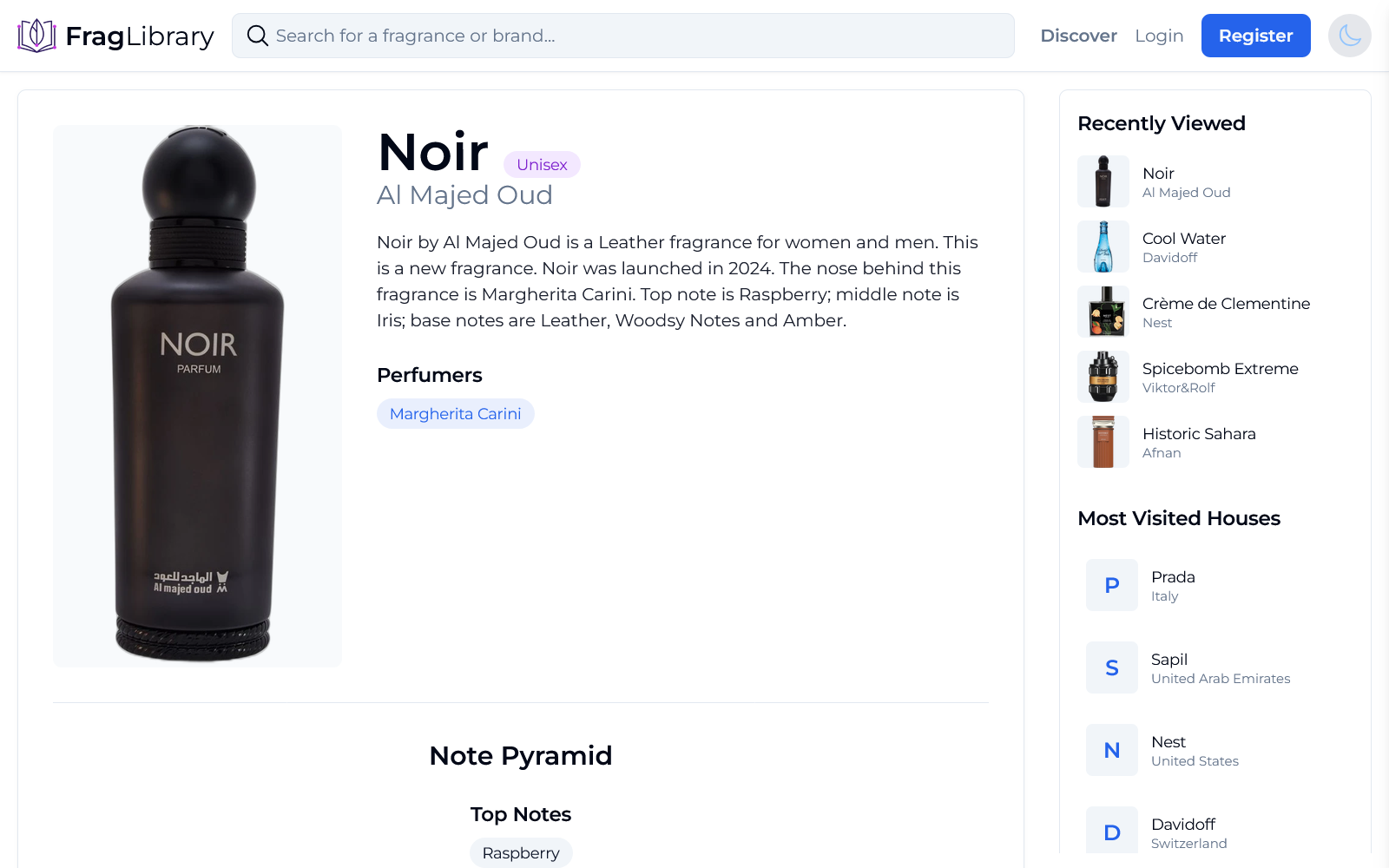
FragLibrary: An AI-Powered Fragrance Discovery Platform
2025Built and deployed a full-stack fragrance discovery platform covering 10,000+ fragrances. Trained a custom embedding model (Scent2Vec 2.0) that encodes scent descriptors into a vector space, enabling cosine-similarity-based preference matching. Deployed on Vercel with a Django REST backend and PostgreSQL database.
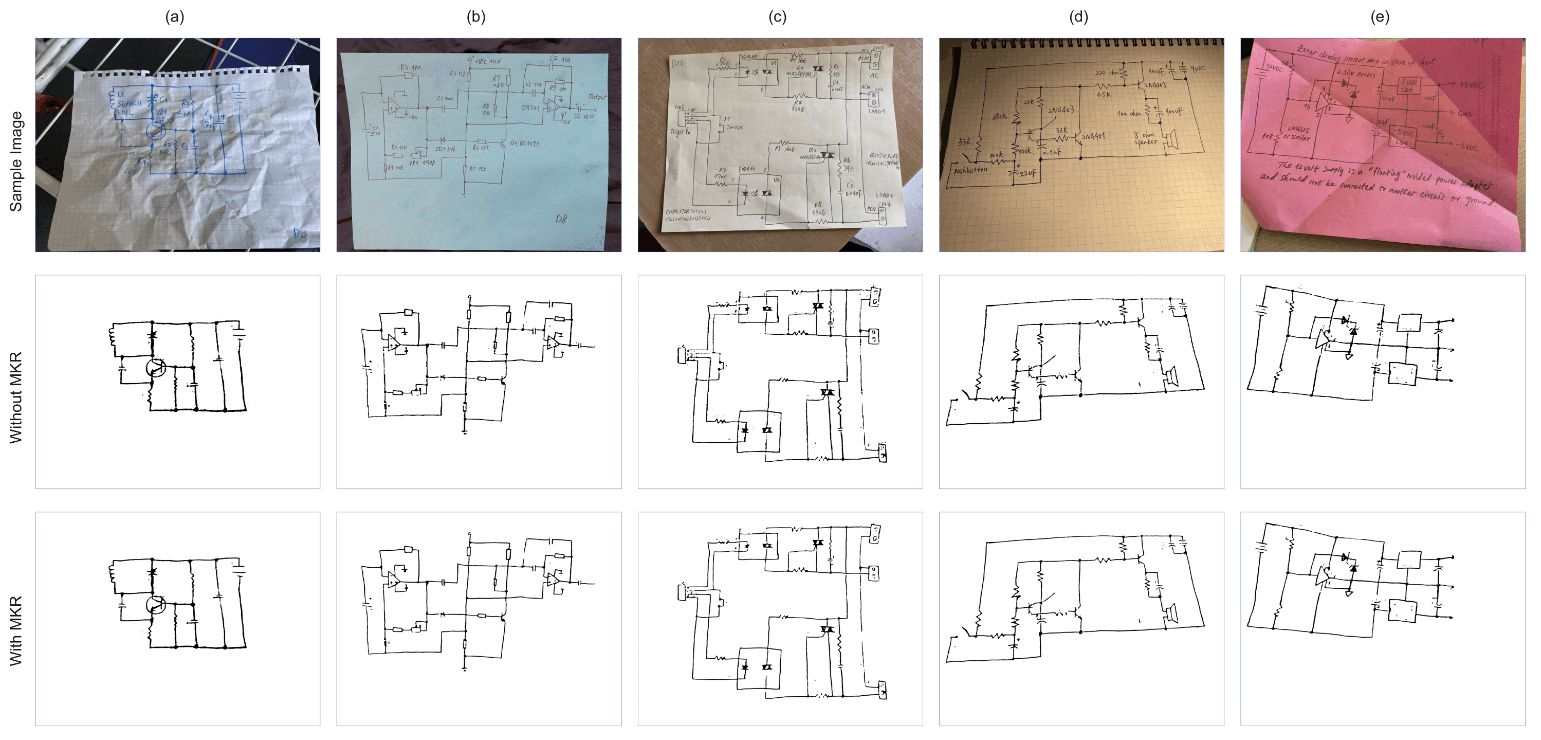
CircuitVision: AI-Powered Recognition of Hand-Drawn Electrical Circuits
CircuitVision: AI-Powered Recognition of Hand-Drawn Electrical Circuits
2025Led development of an end-to-end pipeline that converts hand-drawn circuit diagrams into simulatable netlists. The system chains fine-tuned YOLOv11 for component detection, custom OpenCV algorithms for connectivity analysis, SAM 2 for segmentation, and the Gemini API for component value recognition. Awarded 2nd Best Graduation Project in AI university-wide at Islamic University of Madinah.
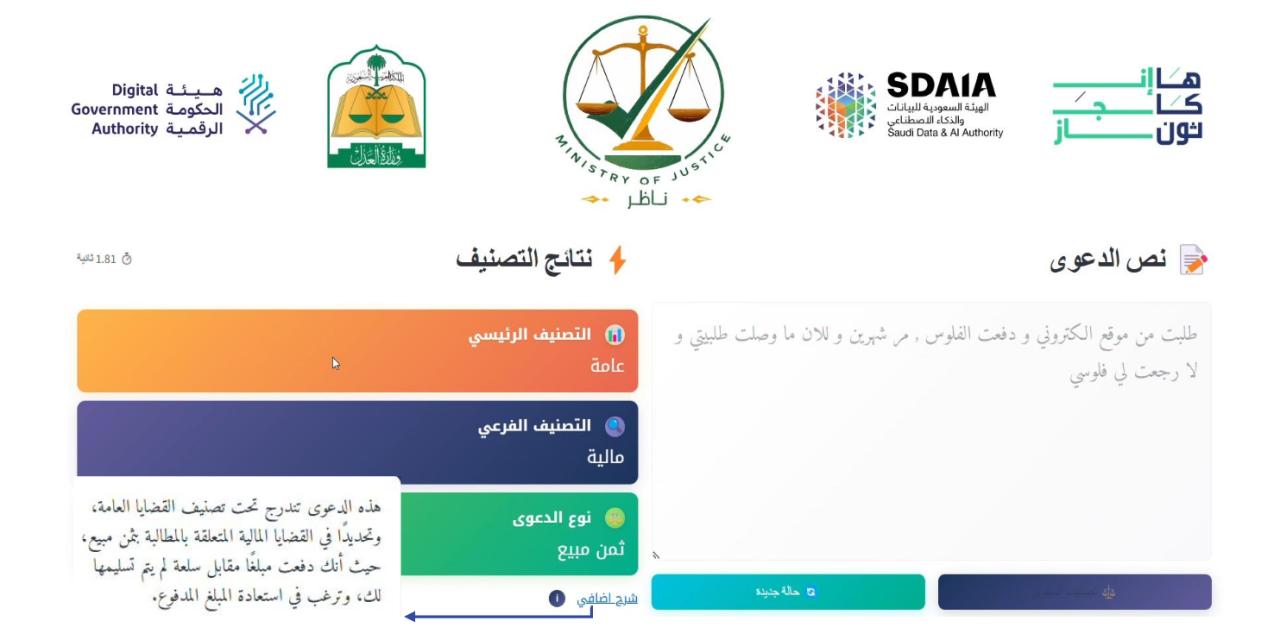
Nathir: AI Legal Case Classification System
2025Co-developed an AI system for classifying legal cases on Saudi Arabia’s “Najiz” judicial platform. Engineered advanced prompts for Google Gemini to interpret user input against the Saudi legal framework, achieving 95% target classification accuracy. Co-winner of SDAIA’s Enjaz Hackathon, a national AI competition with a 150,000 SAR prize pool.
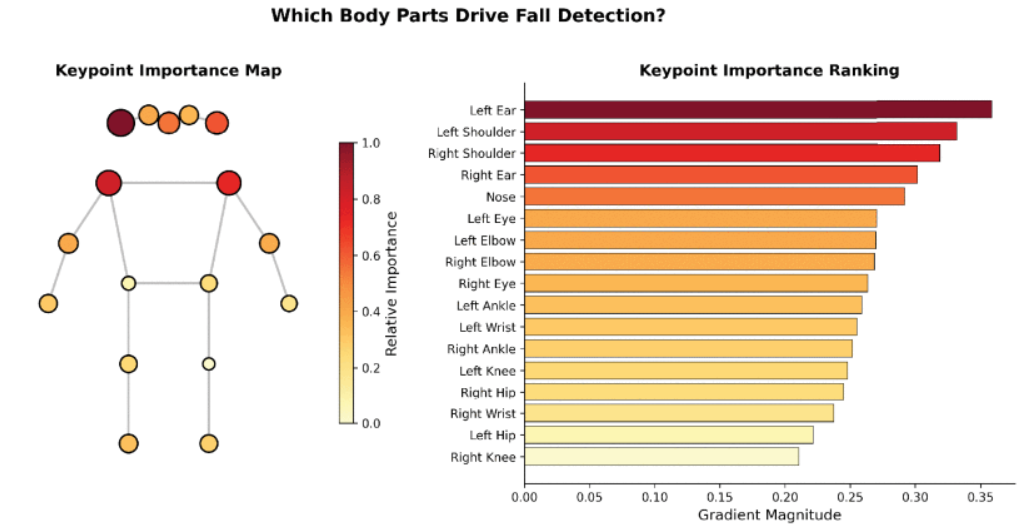
Real-Time Fall Detection with Light Transformers
Real-Time Fall Detection with Light Transformers
2025A system that detects human falls from video in real time, trained on the FallVision dataset. YOLOv11 extracts pose keypoints from each frame, and a lightweight transformer classifies the motion sequence, achieving high detection accuracy at latencies suitable for live clinical and home monitoring, a clear step up from prior CNN-based approaches.
The work was published in IEEE Access (2026). The complete training and evaluation pipeline is available as an open Kaggle notebook.
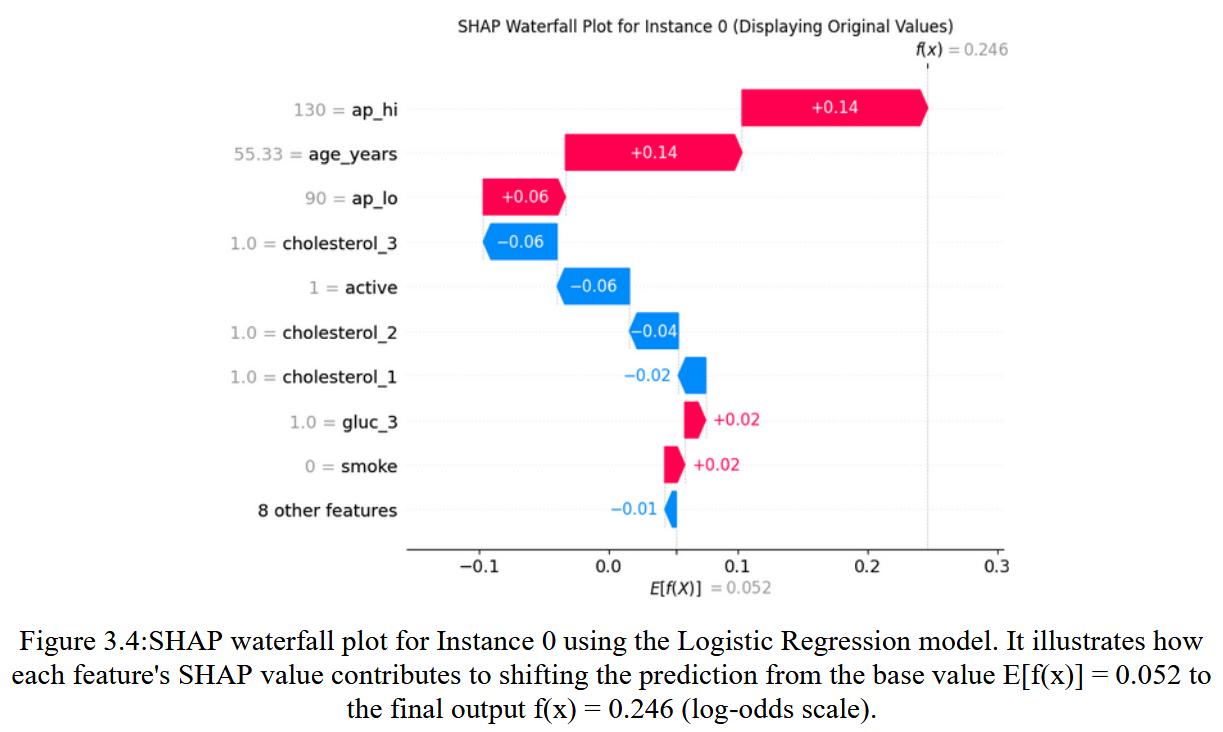
Explainable AI for Cardiovascular Disease Risk Prediction using SHAP
Explainable AI for Cardiovascular Disease Risk Prediction using SHAP
2025Applied SHAP (SHapley Additive exPlanations) to a cardiovascular disease risk prediction model to extract both global feature importance rankings and local patient-specific explanations. Demonstrated how XAI techniques can bridge the gap between ML model performance and clinical interpretability.
HSI Control Suite: GUI for DIY Hyperspectral Imaging
HSI Control Suite: GUI for DIY Hyperspectral Imaging
2025An open-source Python application (PyQt6) that operates DIY push-broom hyperspectral imaging (HSI) systems from a single interface. It integrates camera control, stepper-motor synchronization, data acquisition, spectral calibration, and hyperspectral cube assembly, lowering the barrier to entry for researchers building custom HSI hardware.
Published in SoftwareX (2026) as “HSI Control Suite: An Integrated GUI for Operating and Acquiring Data from DIY Push-Broom Hyperspectral Imaging Systems.”
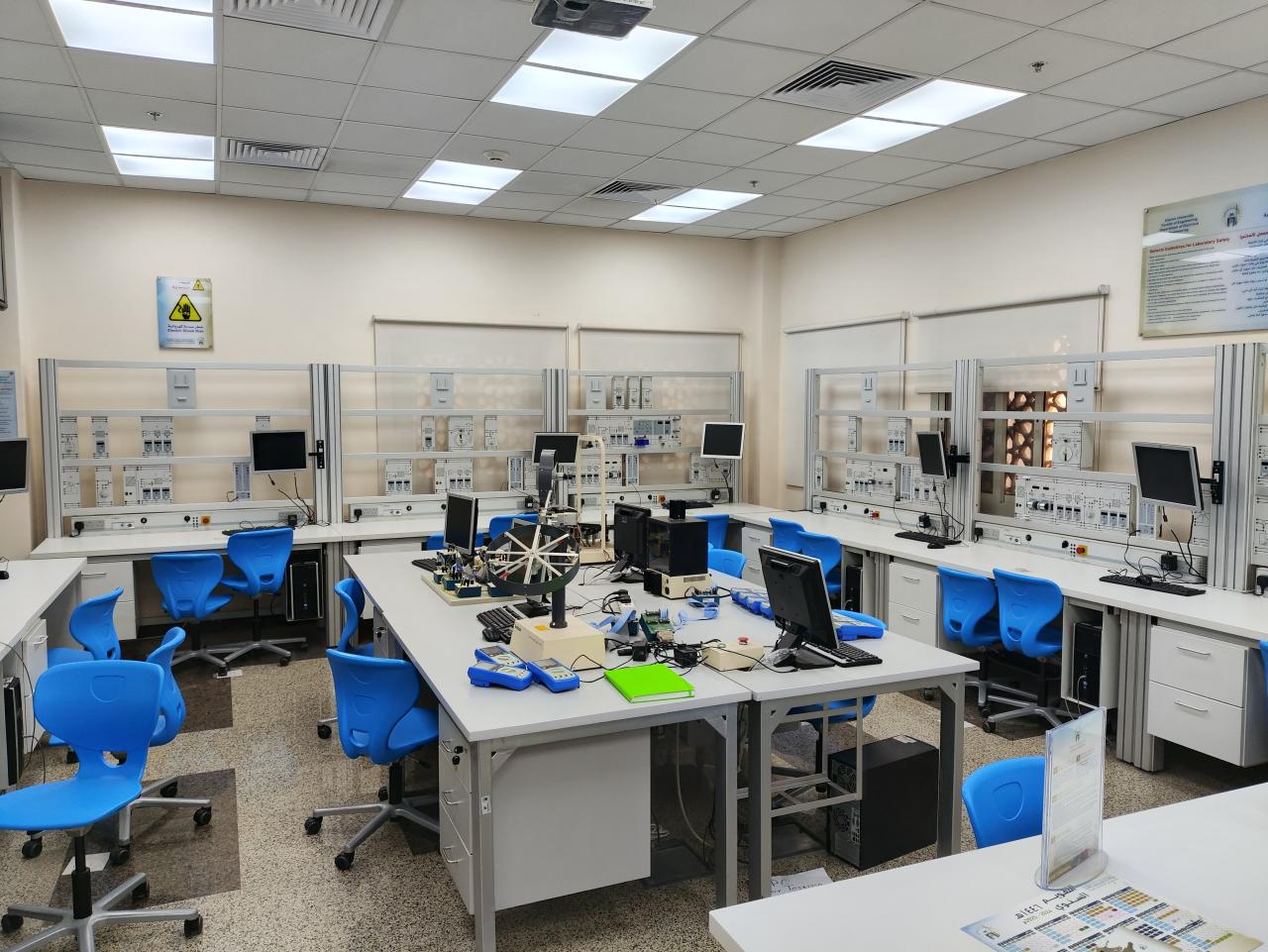
Realigning Control System Labs: Bridging Theory with Practical Application
Realigning Control System Labs: Bridging Theory with Practical Application
2025Initiated and led a student-driven project to redesign Control Systems laboratory modules at the Islamic University of Madinah. Introduced the System Identification Toolbox, simulation-based validation workflows, and experiments incorporating real-world factors such as noise, saturation, and nonlinearities, earning a Letter of Appreciation from the department.
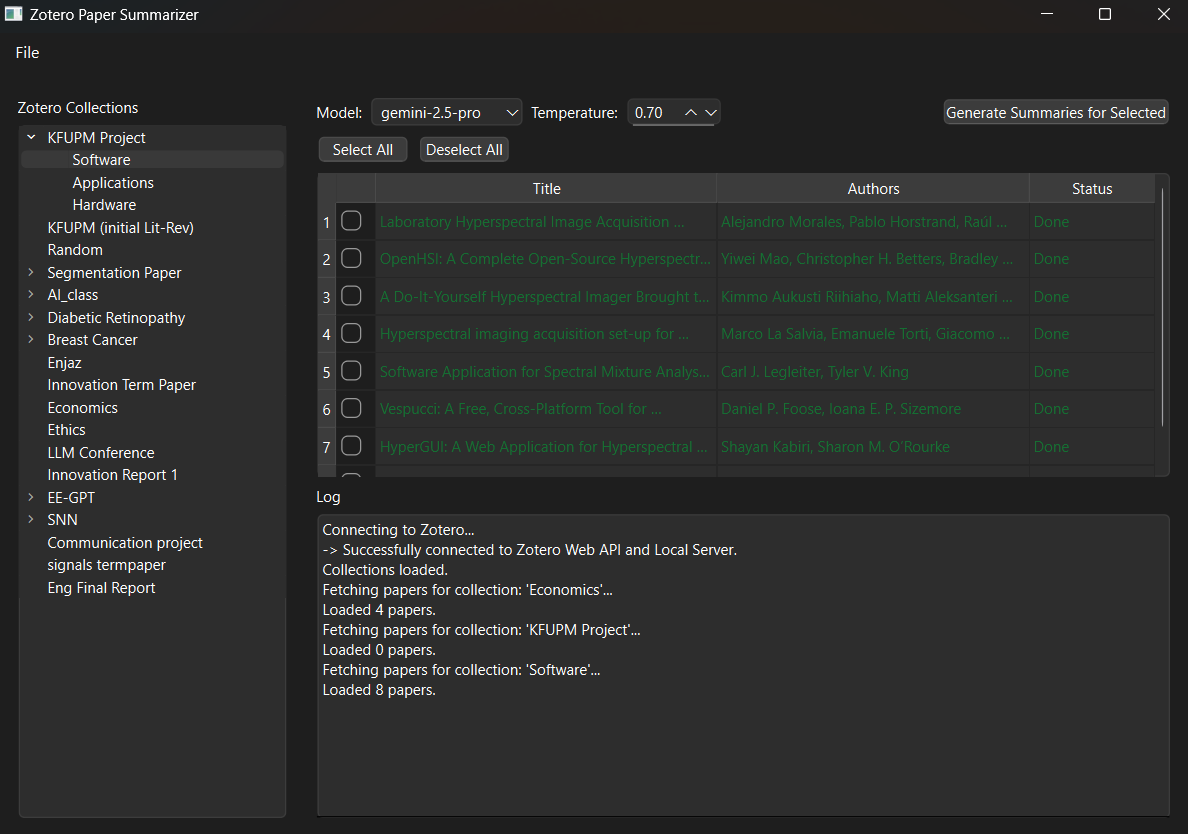
Zotero AI Note Taker
2025A desktop tool that automates literature note-taking by bridging a local Zotero library with Google’s Gemini models. A multi-pane PyQt6 interface lets you browse Zotero collections and papers, then generates structured summary notes for a single paper or a full collection.
Notes are produced with Gemini (2.5 Pro and 2.5 Flash), fully customizable system prompts for tailored output, and BibLaTeX citations, and are written straight back into Zotero. It integrates with both the Zotero Web API and the local desktop app, and persists settings locally.
Circuit Component Detection with YOLOv11
Circuit Component Detection with YOLOv11
2024This module is the first stage of the larger CircuitVision senior design project, which fully automates the analysis of hand-drawn and printed electrical circuits. My focus in this phase was building a robust component detection system around a fine-tuned YOLOv11 model.
The model was trained on the Handwritten Schematics (CGHD) dataset to accurately identify and classify electrical components such as resistors, capacitors, and sources, optimized for high precision and recall. It reached 0.93 mAP50 (0.72 mAP50-95). The detected classes and bounding boxes feed every subsequent stage of the CircuitVision pipeline: node detection, value extraction, netlist generation, and circuit simulation.
Tools: Python, YOLOv11, PyTorch, OpenCV (image pre-processing and detection post-processing), CGHD dataset.
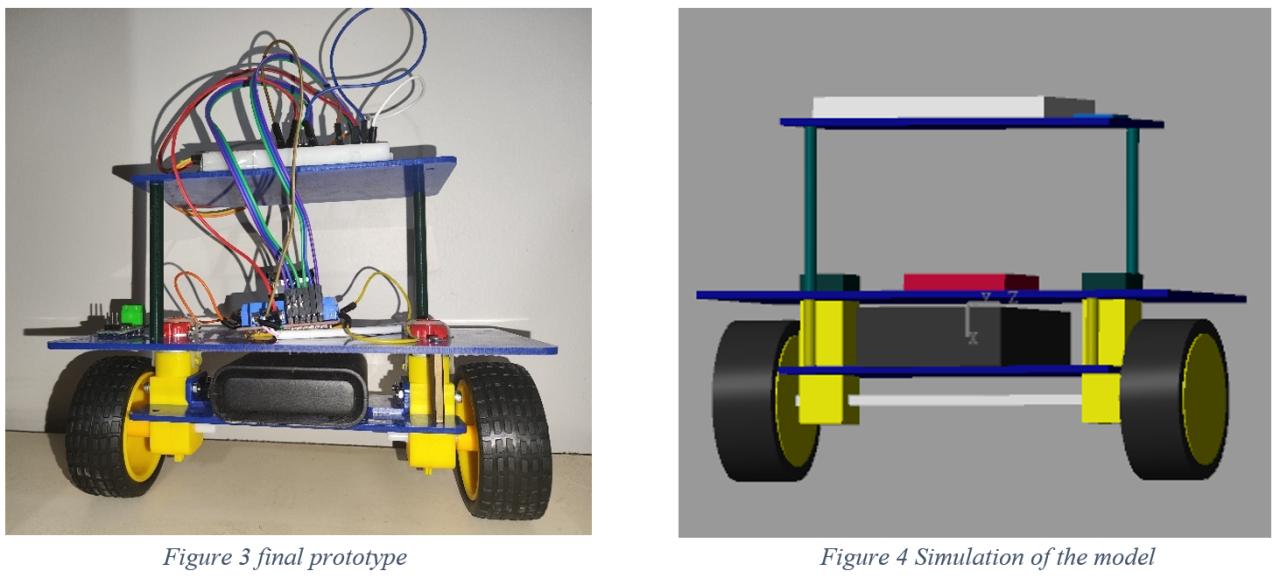
Self-Balancing Robot (Inverted Pendulum) via Deep Reinforcement Learning
Self-Balancing Robot (Inverted Pendulum) via Deep Reinforcement Learning
2024Led a team to design a two-wheeled self-balancing (inverted pendulum) robot, iterating from classical PID and MPC controllers to a Deep Q-Network (DQN) agent for stable balance under disturbances. Built the physical prototype using Raspberry Pi Pico and modeled the full mechanical system in Simscape for simulation-to-reality validation.
AI for Housing Defaulter Prediction & Critical Case Detection
2024Built for the DAL Datathon. A dual-solution system combining an XGBoost regressor for regional housing defaulter volume forecasting with a Restricted Boltzmann Machine (RBM) for unsupervised anomaly detection of cases requiring specialist review.
The datathon was run on a private dataset, so the showcase deck and final report cannot be shared publicly.
Autonomous Robot for WRO RoboSport 2023
Autonomous Robot for WRO RoboSport 2023
2023A three-person team project (with Albara Abbad and Jawad Khan) for the Microprocessors course at the Islamic University of Madinah, targeting the WRO RoboSport tennis competition. We designed an autonomous two-wheeled mobile robot capable of finding and striking a tennis ball without human control.
The robot runs on a Raspberry Pi 4 driving DC motors through motor drivers, with a rack-and-pinion mechanism for the striking motion and a Pi Camera for vision. The detection pipeline, written in Python, isolates the tennis ball by its color and sphericity, and a search over the detection parameters tunes the algorithm for reliable recognition. The result is a robot that can move, locate the ball, and interact with it autonomously, with reinforcement learning proposed as the next step.
Dynamic Website Publisher
2023A tool that captures dynamic websites, saves them with all associated resources to your local machine, and publishes the static output to a remote Git repository. Designed to bridge the gap between dynamic content generation and static hosting.
Hajj & Umrah Help Compass
2022A GPS-based navigation aid designed to help Hajj and Umrah pilgrims move through dense crowds without getting lost. The device works like a compass, guiding the wearer toward a chosen destination such as their camp or a key landmark, using GPS positioning and a simple directional interface.
Built as the final prototype for the Creativity in Engineering Design course at the Islamic University of Madinah, where I led a four-person team through the full design cycle: problem definition, literature survey, design alternatives and constraints, circuitry, the guidance algorithm, and a working prototype.
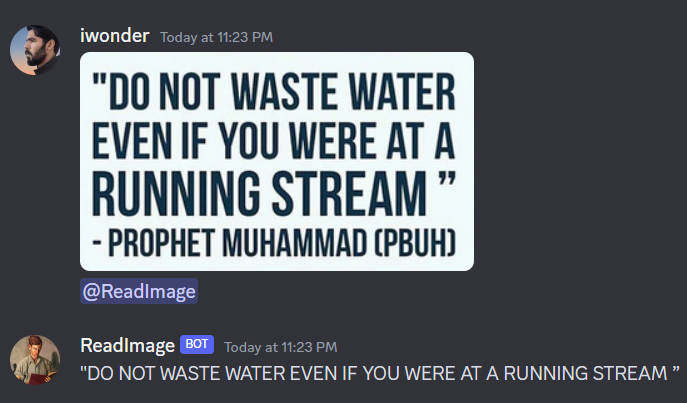
Discord Read-Image Bot
2021A Discord bot that leverages Tesseract OCR to extract and display text from images shared in Discord channels. Users can simply send an image, and the bot will read and return the text content.